
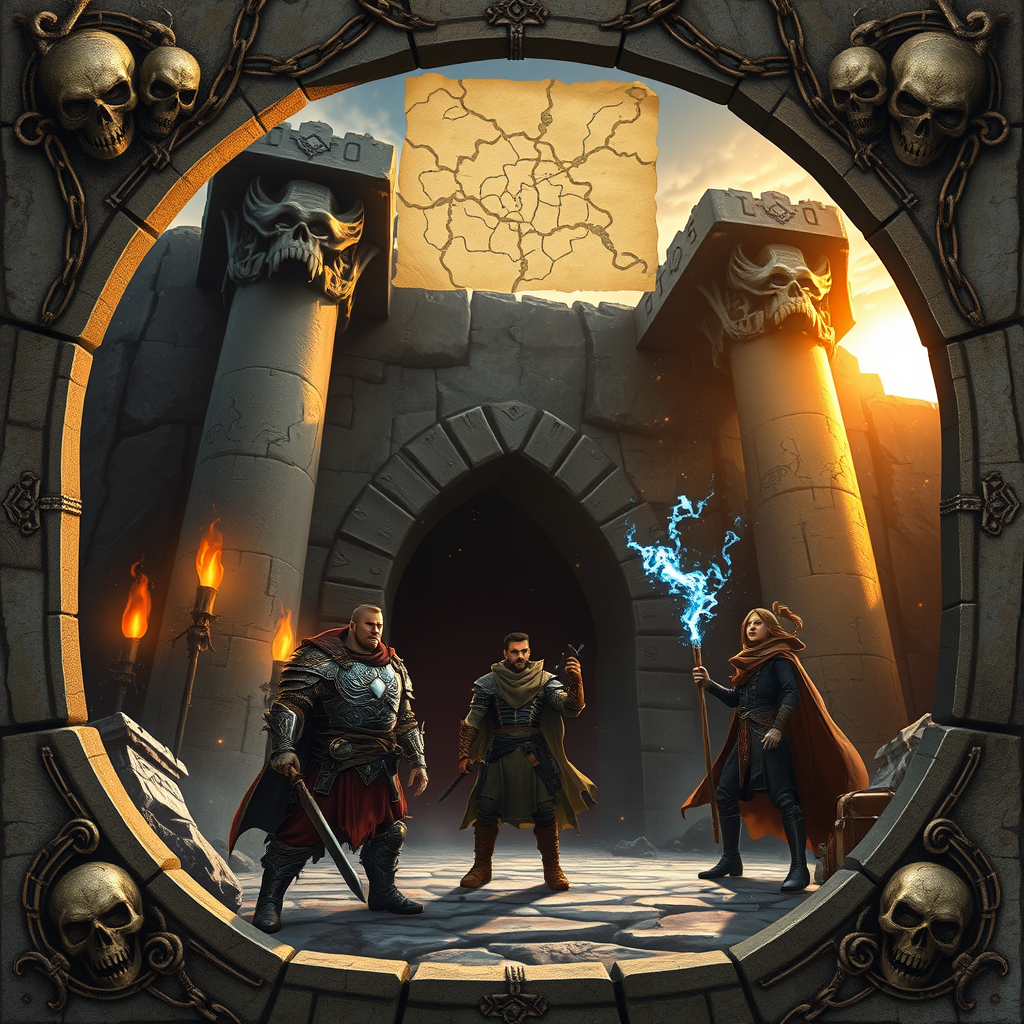
Dungeon Crawler Games: Builds, Loot Loops & Idle RPG Tips
By Jabali Game Engineering · Published on Aug 11, 2026
Dungeon crawler games are built on one irresistible loop: explore a dangerous place, fight what lives there, take its loot, and come back stronger for the next floor. The genre spans classic first-person crawlers, action roguelites, and idle RPGs that progress while you sleep — but the strategy is always about managing risk against reward.
This guide breaks down the core loop, early-game builds that work, AFK farming optimization for idle RPGs, boss preparation, and how to build your own dungeon crawler from a text prompt.
The Core Loop and Why It Works
Every dungeon crawler, from grid-based classics to modern roguelites, runs the same four-beat loop:
- Explore — reveal the map, find resources, identify threats.
- Fight — spend health, potions, and cooldowns to win encounters.
- Loot — convert wins into gear, currency, and upgrades.
- Return deeper — risk what you earned for better rewards.
Good crawlers make each beat feed the next. Great ones add a fifth beat: a meaningful choice about when to push and when to bank your run. That risk decision is the genre's heart.
Early Builds That Actually Work
- Prioritize consistent damage over burst. A reliable DPS build clears floors faster than a crit build that fails half the time.
- One sustain tool minimum — lifesteal, regen, or a shield. Healing scarcity ends more runs than weak damage.
- Take movement upgrades early. Speed and dash charges prevent damage, which is worth more than armor.
- In party crawlers: one well-geared healer is enough for most content; stack the rest into damage and control.
- Roguelite rule: build around what the run gives you, not the plan you entered with. The best players improvise around early drops.
Idle RPG and AFK Optimization
Idle RPGs are dungeon crawlers where the loop runs itself. The strategy is setup, not reflexes:
- Stack multipliers, not flat bonuses. Multipliers compound with every other bonus; flat stats get outscaled within days.
- Align active play with events. Push floors and claim milestones during double-reward windows.
- Farm high-density, low-risk zones. Kill speed matters more than per-kill reward when you are AFK for hours.
- Prestige when gains flatten. Resetting early feels bad and is almost always the mathematically correct call once progress slows.
- An S-tier idle RPG is defined by fair pacing, engaging events, and respectful free-to-play design — judge games on those three axes.
Boss Preparation Checklist
- Stock consumables before the boss floor, not during it.
- Learn one mechanic at a time: most bosses have three or fewer patterns.
- Route to the boss through buff shrines and skip optional elite fights that drain resources.
- In co-op, coordinate burst windows instead of everyone firing cooldowns on pull.
The Most Popular Dungeon Crawler and Idle RPG Games
- Diablo IV — the AAA loot-crawler benchmark; the explore-fight-loot loop at blockbuster scale.
- Hades — the modern roguelite gold standard: death as narrative, tight combat, immaculate escalation.
- The Binding of Isaac and Enter the Gungeon — indie classics proving procedurally generated dungeons sustain thousands of hours.
- Slay the Spire — the deck-building crawler hybrid; choice density done right.
- Vampire Survivors — the bullet-heaven offshoot: one-stick dungeon crawling distilled to pure escalation.
- AFK Arena and Idle Heroes — the idle RPG leaders: the loop automated, strategy moved to team composition and prestige timing.
- Melvor Idle — the beloved deep-cut: a full RPG that plays itself in a browser tab.
How Big Is the Dungeon Crawler Market?
Crawlers sit across two large segments of the $201.6 billion global games market (Newzoo, 2025): premium action RPGs on PC and console (a $43.6B and $44.7B pair of segments), and mobile RPGs — one of mobile's biggest genres even after a cooling year (Newzoo pegged mobile RPG at roughly $18.7 billion for 2025). The roguelite sub-niche punches far above its budget: Hades and Vampire Survivors were built by small teams and became genre-defining hits.
How to Design a Good Dungeon Crawler
- The loop must feel good empty. Walking, fighting, and looting have to be satisfying before any meta-progression exists.
- Meaningful loot, not more loot. Every drop should change a decision: equip it, sell it, or build around it.
- Escalation with an off-ramp. Let players bank progress and leave; greed should be a choice, not the only path.
- Telegraphed danger. Elites and bosses need readable patterns. Death to a pattern you could have learned feels fair; death to noise does not.
- Idle design is pacing design. In idle RPGs, your job is scheduling dopamine: multipliers stacking, milestones landing, prestige arriving just as gains flatten.
How AI Is Changing Dungeon Crawlers
Procedural generation is the genre's original algorithm — AI sharpens it: layout generators that guarantee interesting floor plans, loot tables balanced by simulation, and difficulty directors that adapt to how a player is performing. AI creation tools like Jabali go a step further: the entire crawler — floors, loot, boss logic, idle timers — can be specified in a prompt and iterated on by taste rather than code.
Build Your Own Dungeon Crawler with Jabali
The explore-fight-loot loop is a design template, and templates are exactly what AI game creation handles best. Describe your dungeon and Jabali builds a playable crawler you can tune and share.
Prompts to try in Jabali Studio:
- "A top-down dungeon crawler with three floors, a shopkeeper between floors, and a boss that summons minions at half health."
- "An idle RPG where heroes auto-fight through a dungeon and I spend loot on party upgrades between runs."
- "A cozy roguelite dungeon crawler where death turns my loot into seeds for a garden that buffs the next run."
Tune difficulty curves, loot tables, and boss patterns visually; playtest instantly; publish with one link. For progression-system ideas, see how creators use Jabali for narrative RPG hybrids, or start from zero with how to make a game without coding. Thousands of creators have shipped their first RPG this way — the community is full of them.
Keep reading: AI Character Sims · Interactive Story Games · Shooting Games Online
FAQs
Q: What defines a dungeon crawler game?
A: A dungeon crawler is built on the explore-fight-loot-upgrade loop: you clear dangerous floors, take loot, and return stronger for deeper, riskier floors with better rewards.
Q: What is the best early build in a dungeon crawler?
A: Consistent damage over burst, at least one sustain tool like lifesteal or regen, and early movement upgrades. Reliable clears beat lucky crits.
Q: How do I maximize AFK gains in idle RPGs?
A: Stack multiplicative bonuses, align claims with event windows, and farm high-density, low-risk zones where kill speed outweighs per-kill rewards.
Q: When should I prestige in an idle RPG?
A: When gains visibly flatten. Resetting early feels costly, but the permanent multipliers almost always outpace staying in a stalled run.
Q: How do I beat tough dungeon bosses?
A: Pre-stock consumables, learn one boss pattern at a time, route through buffs before the arena, and coordinate burst windows with teammates instead of overlapping cooldowns.
Q: Can I build a dungeon crawler without coding?
A: Yes. AI game creators like Jabali turn a text prompt into a playable crawler — describe floors, loot, and bosses, then tune the difficulty curve visually and share your game as a link.
Q: What are the most popular dungeon crawlers and idle RPGs?
A: Diablo IV leads AAA crawlers; Hades is the roguelite benchmark; The Binding of Isaac, Enter the Gungeon, Slay the Spire, and Vampire Survivors define the indie wave; AFK Arena, Idle Heroes, and Melvor Idle lead idle RPGs.
Q: How big is the dungeon crawler market?
A: Crawlers span premium RPGs on PC and console ($43.6B and $44.7B segments in 2025, Newzoo) and mobile RPGs, one of mobile's largest genres at roughly $18.7 billion in 2025 despite a cooling year.
Q: What is the golden rule of dungeon crawler design?
A: The core loop must feel good empty. Walking, fighting, and looting have to be satisfying before any upgrades or meta-progression exist — progression can only amplify fun that's already there.